What “Music-Integrated” Means at Drool
At most daycare centers, music is a subject: a twenty-minute class squeezed between snack time and nap time. At Drool of Rock, music isn’t a subject at all, it’s the thread woven through everything else. When your child transitions from breakfast to circle time, a song tells them what’s coming next. When a toddler is learning to count, they’re clapping out numbers on a drum. When a preschooler practices letters, they’re singing the sounds before they write them.
This isn’t a gimmick. Music engages more regions of a young brain simultaneously than almost any other activity: language centers, motor planning, emotional regulation, memory, and social connection all fire together when a child sings, claps, or moves to a beat. That’s why we build our entire day around it instead of scheduling it in as an extra.
Every classroom is led by a teacher trained in early childhood development and supported by musicians from our partnership with The Lutherville Rock School. Your child isn’t just hearing recorded music in the background. They’re making music, guided by adults who understand both how children grow and how rhythm, melody, and movement support that growth. That combination, credentialed early-childhood teaching paired with real musicianship, is what “music-integrated” means at Drool of Rock, and it’s the foundation for everything described below.
A Day in the Life: Infant Curriculum (6 weeks–12 months)
For our youngest learners, a day at Drool of Rock is built around rhythm in the most literal sense: predictable, gentle patterns that help infants feel safe and regulated. Mornings begin with soft, live-sung greetings as each baby arrives, a practice that helps infants associate arrival with warmth rather than separation anxiety.
Throughout the day, caregivers use lullabies and simple melodies to signal transitions between feeding, tummy time, and rest, so infants begin to anticipate what’s next long before they understand words. Sensory exploration is a major part of the infant room: babies feel the vibration of a hand drum, watch a caregiver hum against their chest, or reach for soft shakers designed for tiny hands.
Nap time uses the same curated lullaby each day, tied to that baby’s individual soothing routine, supporting healthy sleep associations. Parents receive a same-day update noting feeding times, naps, and a note on their child’s mood and engagement that day. Because our infant caregivers are trained specifically in this age band, ratios stay low and routines stay consistent, so your baby experiences the same voice, the same songs, and the same rhythm of care every day
A Day in the Life: Toddler Curriculum (12–24 months)
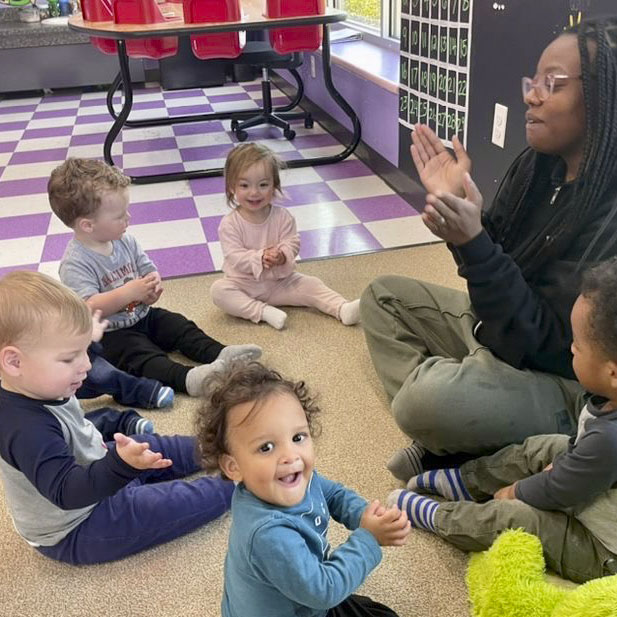
Toddlers thrive on repetition, movement, and the thrill of “doing it myself,” and our toddler day is built to give them all three through music. Mornings start with a welcome song where each child is named individually, something toddlers quickly learn to anticipate and even sing along with. Circle time follows, with call-and-response songs and simple instrument play that build vocabulary and turn-taking skills, two major toddler milestones.
Throughout the morning, toddlers rotate through hands-on centers: shaking egg shakers to a beat, banging on child-safe drums, and moving their whole bodies to tempo changes (fast, slow, stop) that build both listening skills and gross motor control. These activities double as language lessons: toddlers learn action words like “shake,” “tap,” and “freeze” through play rather than flashcards.
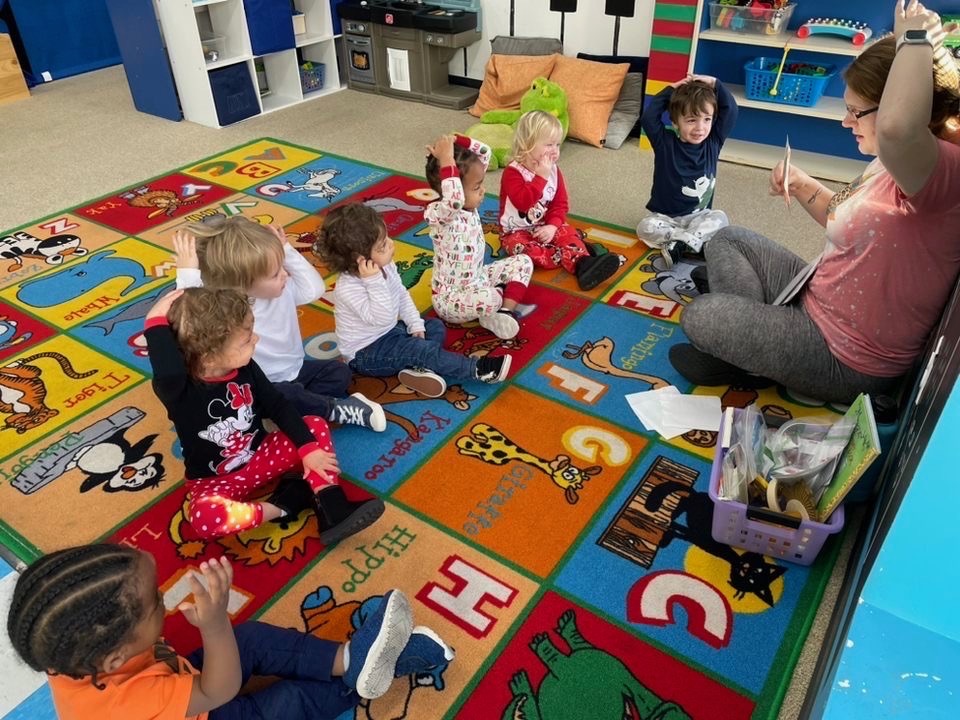

Lunch and nap are paired with the same calming instrumental playlist each day, giving toddlers a reliable auditory cue that it’s time to slow down. In the afternoon, outdoor time often includes parachute play set to music and simple movement games like musical freeze dance, which build coordination while reinforcing impulse control.
Toddler teachers document milestones like new words, independent movement, and social interactions daily, sharing highlights with parents at pickup.
Toddler care detail
A Day in the Life: Preschool Curriculum (2–4 years)
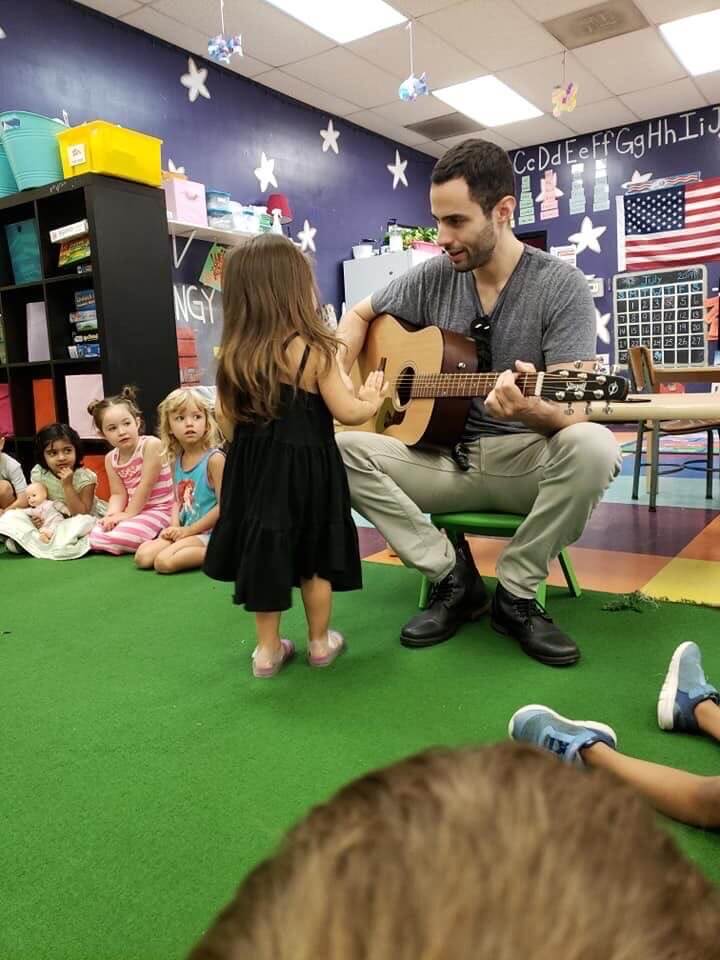
Preschool is where music, literacy, math, and outdoor exploration start to visibly work together. The day opens with circle time, where children practice calendar concepts, weather vocabulary, and attendance, all set to song, which helps preschoolers retain sequencing and number concepts far more easily than rote recitation.
Literacy centers pair picture books with matching songs, so a story about animals might be followed by an animal-sounds sing-along, reinforcing vocabulary and comprehension.
Music and language development
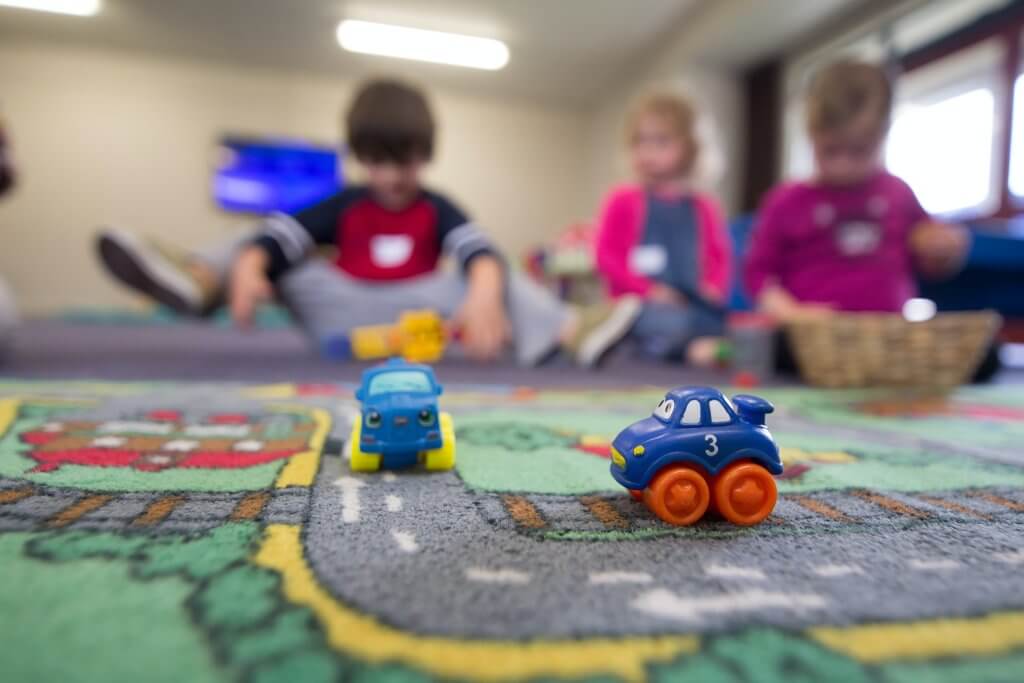
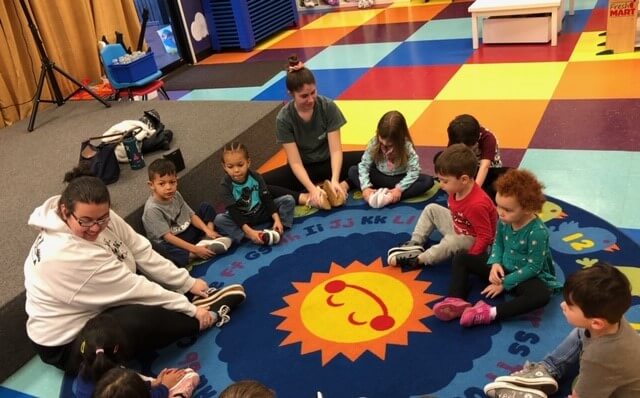
Math concepts like counting, patterns, and sorting are introduced through rhythm games: clapping patterns that repeat, then change, teach preschoolers to recognize and predict sequences, a precursor skill to both math and reading.
Instrument exploration becomes more structured at this age. Children learn to identify instruments by sound, practice keeping a steady beat on a xylophone, and begin simple group performances that build confidence and cooperative play. Outdoor time incorporates movement games with a musical component, obstacle courses paced to a beat, freeze dance, and parachute songs.
Afternoons include a wind-down music review, where the class revisits songs from earlier in the day. Preschool teachers track developmental progress across language, math readiness, social skills, and motor development, sharing observations with families regularly.
A Day in the Life: Pre-K Curriculum (4–5 years)
Our Pre-K curriculum keeps the music-first approach while sharpening its focus on kindergarten readiness. Mornings begin with a more advanced circle time: children lead portions of it themselves, taking turns as “helper of the day” to call attendance or introduce the daily song, building the confidence and independence kindergarten teachers look for.
Literacy instruction becomes more formal, letter sounds, sight words, and early writing, but stays music-driven: phonics are practiced through chants and songs proven to help children internalize sound-letter relationships faster than drills alone. Math concepts like addition, patterns, and measurement are introduced through rhythm and counting games, building number sense before children ever see a worksheet.
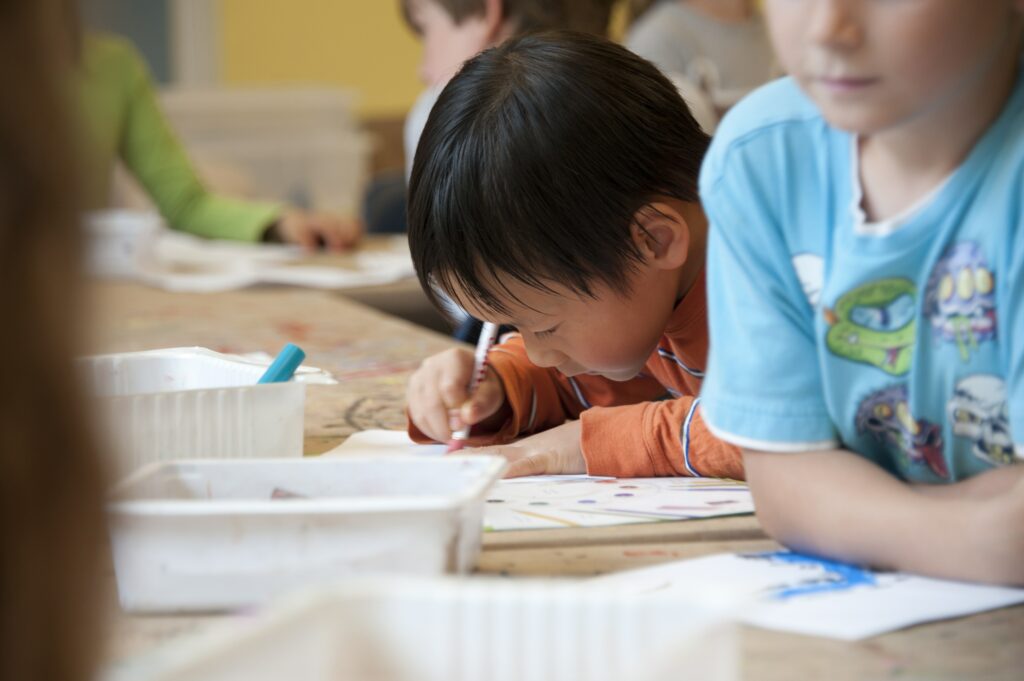
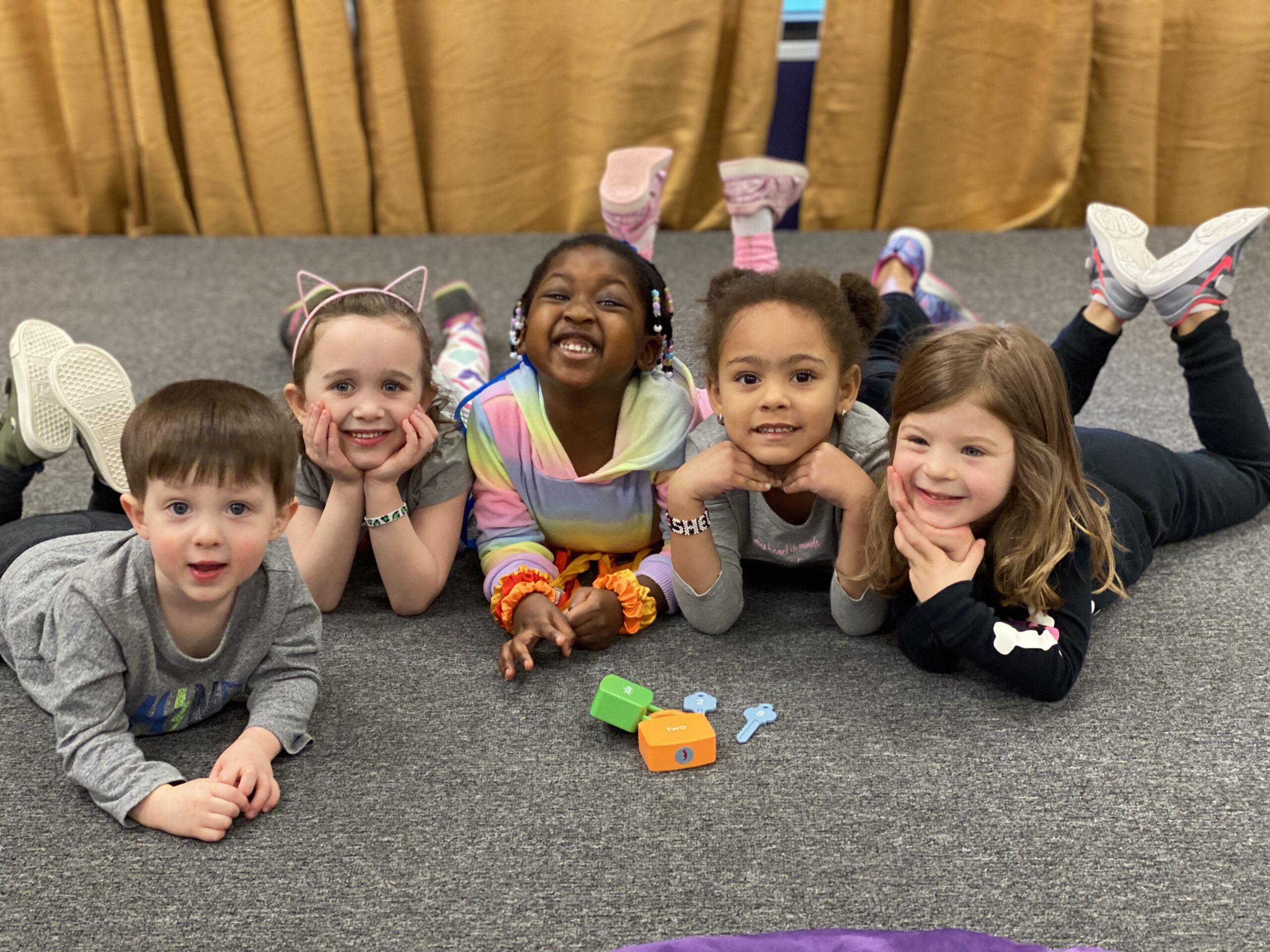
Pre-K children take on more complex instrument work, including simple group performances with multiple parts, which builds listening skills, patience, and teamwork. Structured outdoor games at this age emphasize following multi-step directions set to music, a direct precursor to the multi-step listening skills kindergarten classrooms require.
Throughout the year, Pre-K teachers track progress against kindergarten-readiness benchmarks and share detailed updates with families. The goal isn’t just a child who loves music. It’s a child who walks into kindergarten confident, prepared, and excited to learn. Pre-K detail
How music prepares kids for kindergarten
How We Measure Progress
Loving your child’s day is one thing; knowing they’re actually developing on track is another, and we take that seriously. Every classroom at Drool of Rock documents daily highlights, including mood, meals, naps, and notable moments, shared with parents the same day.
Beyond daily notes, teachers conduct periodic developmental check-ins for every age group, tracking progress across language, motor skills, social-emotional growth, and (for our older children) kindergarten-readiness benchmarks aligned with frameworks used by early-childhood professionals, including guidance consistent with the Maryland Kindergarten Readiness Assessment (KRA).
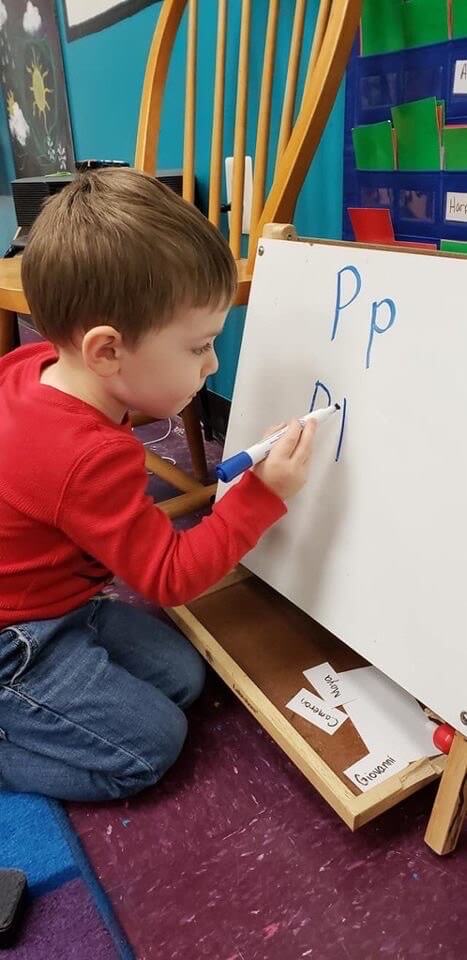

Parents also receive regular one-on-one conversations with lead teachers to discuss progress in more depth, ask questions, and set goals together. Because our curriculum is music-integrated rather than music-supplemented, teachers are also able to observe developmental progress in ways a traditional classroom might miss.
The result is a clear, ongoing picture of your child’s growth, not just a sense that they had fun today (though they will), but real insight into how they’re developing the skills they’ll need for kindergarten and beyond.
Schedule a Tour to See It in Action
Reading about a music-integrated curriculum is one thing. Watching a room full of toddlers keep a beat together, or hearing a Pre-K class harmonize during circle time, is another entirely. The best way to understand what makes Drool of Rock different is to see a normal day in person.
Tours of our Owings Mills location are available by appointment, Monday through Friday, and give you a real look at the classroom your child would join. You’ll meet the teachers, hear the music, and see firsthand how a music-integrated day supports everything from early literacy to kindergarten readiness.

Testimonials Singing our Praises
Our curriculum comes to life through the experiences of the families we serve. Here’s what parents from Owings Mills and surrounding communities have to say about their children’s growth, confidence, and love of learning at Drool of Rock.
I love this place!
There is not a more colorful, musical environment available for young children in this area. Having taught preschool for 30 years, and performed for young children for all of those years I’ve seen many, many child care centers, schools, camps and venues. None of them provide the daily musical experience, let alone professional musicians, at the level D.O.R does. There is, more importantly, an outstanding, caring staff with plenty of experience. The enclosed (walled) outdoor play area, which provides some cover on rainy days, is extremely safe. I love this place!

I am thrilled with the program!
I love the energy and enthusiasm at Drool of Rock. My child is a very active, passionate, and social being. These are all things that are fostered at Drool of Rock. My child has made new friends, sings new songs, dances new dances and is tired at the end of the day. Counting to twenty in Spanish and writing letters. I am thrilled with the program!
We LOVE Drool of Rock!
We LOVE Drool of Rock! Our son had an in-home nanny for his first 3 years and we were very worried about how he would adjust to preschool. The staff and children were so incredibly welcoming which helped him transition beautifully. It is a fun, engaging learning environment with caring and competent teachers. Our son loves the music and art focus and it is artfully decorated to support the theme – not dark at all – in fact extremely bright and colorful. As a former early childhood educator who has seen many, many daycare centers and preschools – I do believe this is a top notch preschool environment and would recommend it.
Our Rockin’ Daycare Locations
Families can choose the Drool of Rock location that best fits their commute and schedule, while enjoying the same engaging curriculum and caring environment at each center.
Want to see our music curriculum in action? See how music shapes our day — browse our photo gallery and video tour from our Owings Mills classrooms.