
What Music-Infused Infant Care Looks Like
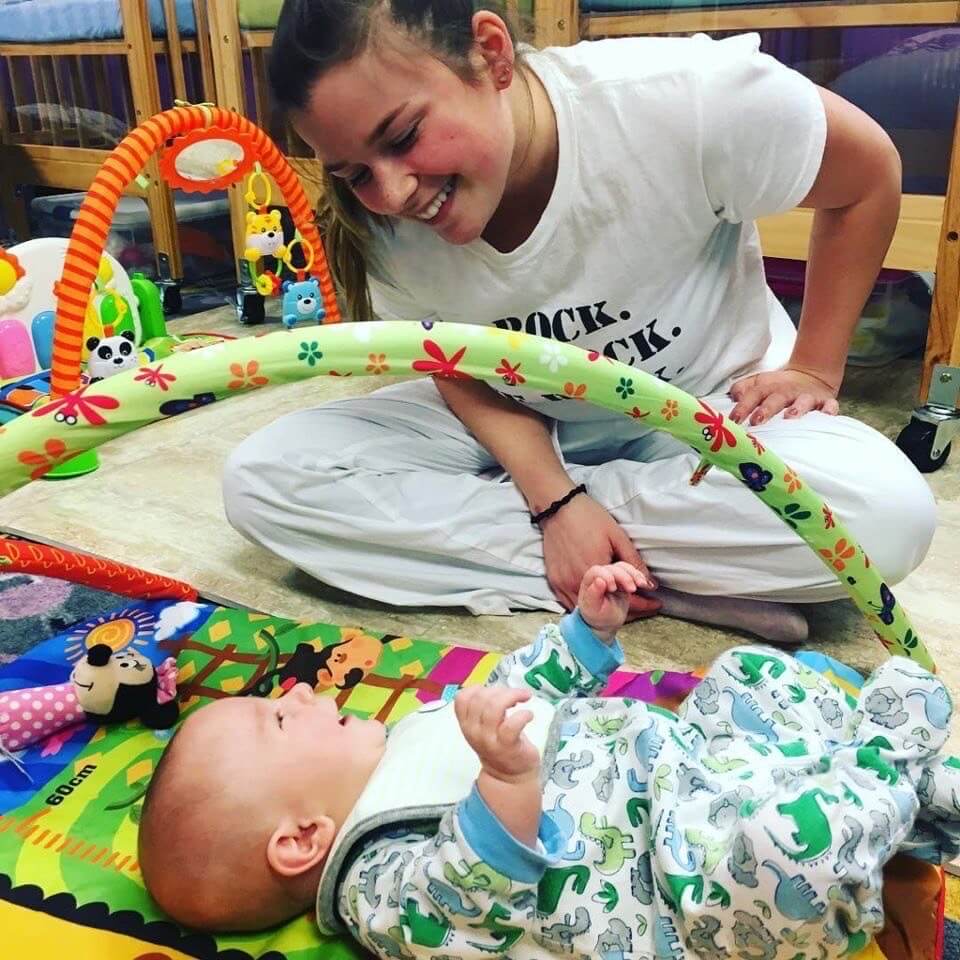
At Drool of Rock, infant care in Owings Mills starts with music from the very first day. Babies as young as six weeks old join a routine where lullabies, gentle rhythm, and calm melodic sound are woven into everything from diaper changes to naptime transitions. Instead of silence or generic background noise, caregivers use consistent, familiar songs to signal what’s coming next, a feeding cue, a settling-down song before sleep, a cheerful tune during tummy time, so infants build a sense of predictability and security through sound.
This isn’t decoration. Music at this age supports real developmental work: exposure to varied pitch and rhythm helps build the neural pathways infants will later use for language, soft vocal interaction from caregivers strengthens early bonding and emotional regulation, and call-and-response humming or simple singing gives babies their first experience of turn-taking, long before they can speak.
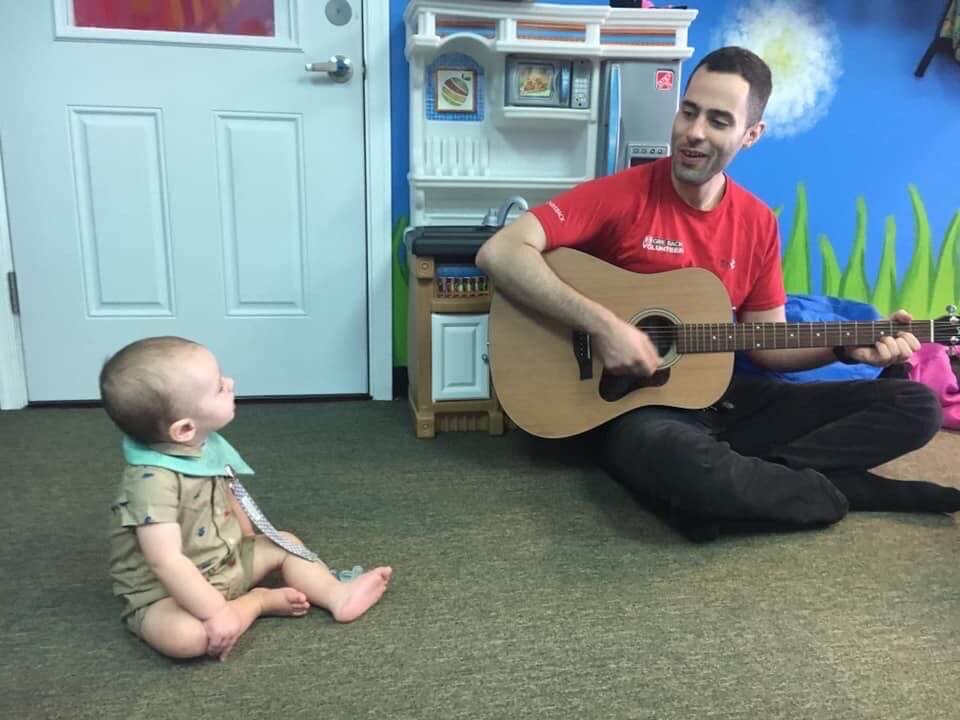
Every caregiver in our infant room is trained in music-based soothing techniques, and several of our staff have backgrounds as musicians themselves, so the singing and rhythm your baby experiences throughout the day comes from real comfort and skill, not a recording on a speaker. Parents often tell us this is the detail that separates Drool of Rock from a standard daycare: the music isn’t a special activity we schedule, it’s simply how the room sounds all day long.
Infant Daily Schedule at Drool of Rock
A typical day in our infant room balances feeding, rest, sensory play, and gentle music exposure around each baby’s individual rhythm, since infants this young are not yet on a group schedule the way toddlers and preschoolers are.
Mornings begin with arrival and a caregiver check-in, where parents share how their baby slept and ate at home so the day can be adjusted accordingly. Feeding happens on each baby’s own timeline, paired with soft, consistent songs that help signal what’s happening. Music time is built into the middle of the day: soft instrumental sounds, shakers, and simple call-and-response humming give babies a safe, low-stimulation way to explore sound and cause and effect. Naptime follows, wound down with the same few lullabies each day so babies learn to associate them with rest. Afternoons include tummy time, floor play, and short outdoor time when weather allows, all layered with quiet singing and rhythm. The day closes with a second caregiver check-in at pickup, covering feeding, sleep, and mood so parents have a clear picture of their baby’s day.

Our Infant Room Setup
Our infant room is a separate, dedicated space, not a shared multi-age room, so the environment can be kept calm, clean, and appropriately quiet for babies six weeks to twelve months old. Maryland licensing requires a staff-to-infant ratio of 1 to 3, and we maintain that ratio so each baby gets consistent, individual attention throughout the day.
The room includes a dedicated napping area separated from the active play space, a sensory and music corner with soft instruments, shakers, and textured materials safe for little hands and mouths, and a clean, organized feeding and diapering area. We also keep parents connected throughout the day through the Telegram app, which shares feeding times, naps, and daily updates in real time.
Maryland Infant Care Requirements (What Parents Should Know)
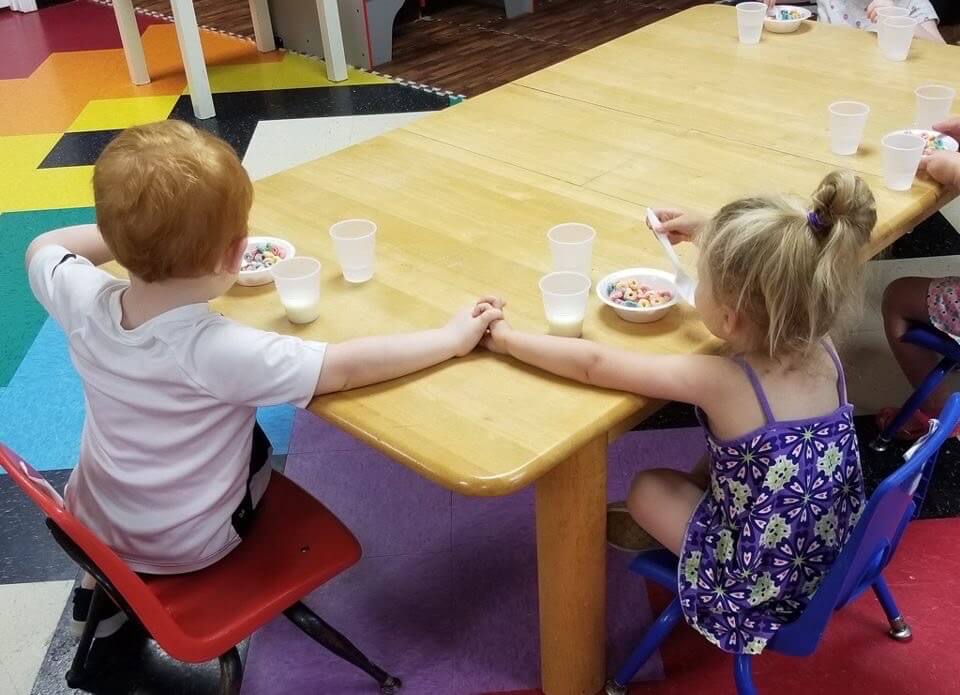
When you’re comparing infant care providers in Owings Mills, it helps to know what Maryland actually requires, so you can calibrate what you’re seeing at any center. Maryland’s child care licensing regulations set a staff-to-infant ratio of 1 to 3 for children under 12 months, tighter than the ratios required for toddler and preschool age groups, because infants need closer, more individualized supervision.
Licensed providers must also meet state health and safety requirements covering staff training, facility cleanliness, and safe sleep practices, and staff working with infants are trained in areas like safe sleep positioning and basic infant CPR. Providers are also subject to state licensing inspections. Understanding these baseline requirements can help parents ask better questions when touring any infant care provider, not just Drool of Rock, and know what’s standard versus what’s a genuine differentiator.
Why Music Matters for Infants
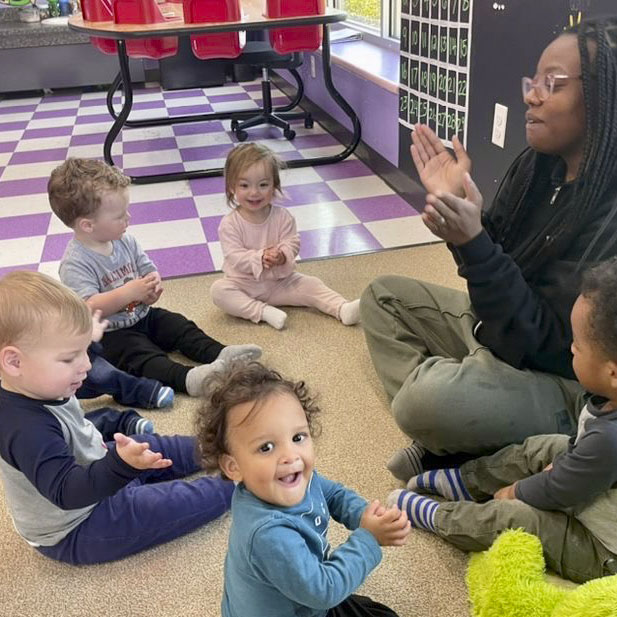
Music isn’t just a pleasant addition to infant care, it plays a real role in early brain development. Researchers who study early childhood development have consistently found that exposure to varied sound, rhythm, and song in the first year of life supports the neural connections infants later rely on for language and communication. Hearing patterns of pitch and rhythm repeated consistently helps infants begin to distinguish sounds that matter, an early building block of language acquisition, well before they can form words themselves.
Music also supports emotional regulation. A familiar, calm song can help settle a fussy baby faster than words alone, because rhythm and melody engage infants in a way that plain speech often doesn’t. And shared musical moments, like a caregiver softly singing while rocking a baby, help build the secure attachment that’s foundational to healthy emotional development.
Organizations like NAEYC (the National Association for the Education of Young Children) highlight music and movement as valuable tools in early learning environments, and Maryland’s own early childhood resources point to responsive, language-rich caregiving as a key factor in infant development. At Drool of Rock, we’ve simply built our entire infant program around that principle from day one.
Tuition Tier for Infant Care
As with most licensed child care providers, infant care is our highest tuition tier. This reflects the lower staff-to-child ratio required for babies under 12 months (1 to 3, compared to higher ratios for older age groups), which means more staff hours dedicated to fewer children. For families with multiple children enrolled, we offer 10% off the oldest child’s tuition. For current infant care tuition rates and available start dates, visit our Daycare Enrollment page or contact our team directly, since rates and openings can change based on classroom availability.