Serving Milford Mill Families from Our Owings Mills Location
Families in Milford Mill are typically just 5 to 10 minutes from Drool of Rock’s Owings Mills center at 10 Easter Court, making the trip a manageable addition to an existing commute or errand route rather than a detour. On-site parking sits right outside the entrance, and our drop-off and pickup routines are built to keep mornings and afternoons simple rather than rushed. For families specifically drawn to a language-through-music approach, that short extra drive tends to feel worthwhile once they see how deliberately music is woven into everyday routines rather than treated as a separate lesson bolted onto the schedule.
Why Music Supports Early Language Development
Songs and language share the same basic building blocks: rhythm, repetition, and pattern. Children who are sung to regularly, and who are encouraged to sing along, tend to absorb new vocabulary, sentence structures, and listening skills faster, because a melody turns repetition into something that feels like play instead of drilling. Predictable song structures also help children anticipate what word or phrase comes next, which builds early phonological awareness, an important building block for later reading. Call-and-response singing gives children low-pressure practice using their own voice and forming words, which matters most for toddlers and preschoolers still building confidence with spoken language. Parents can read more about the research behind this connection in our post on music and language development.
How We Build Language Skills Into Everyday Routines
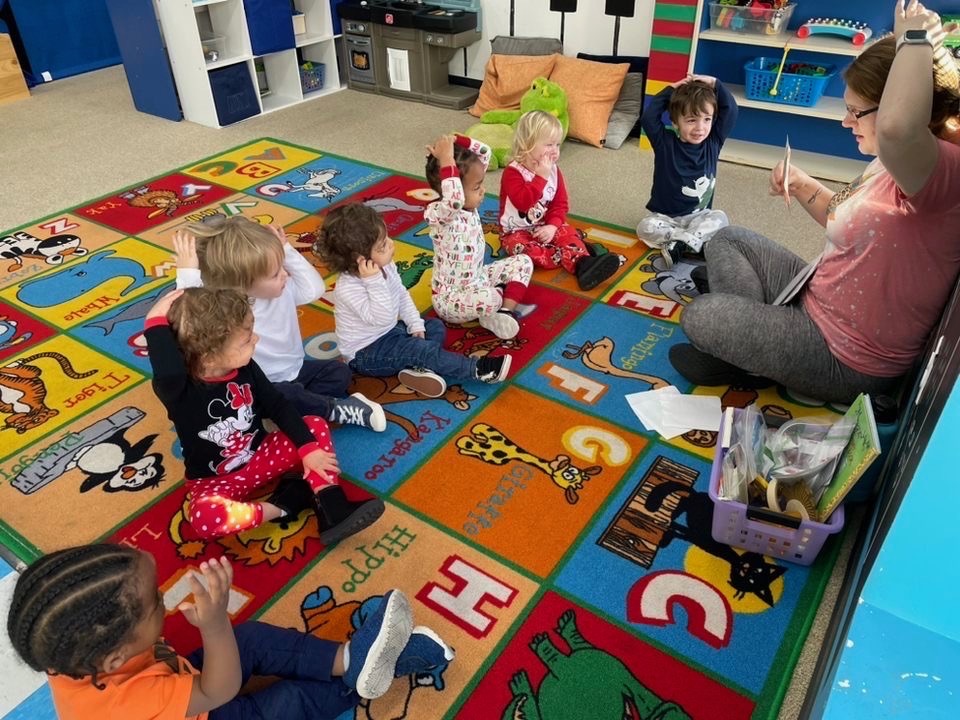
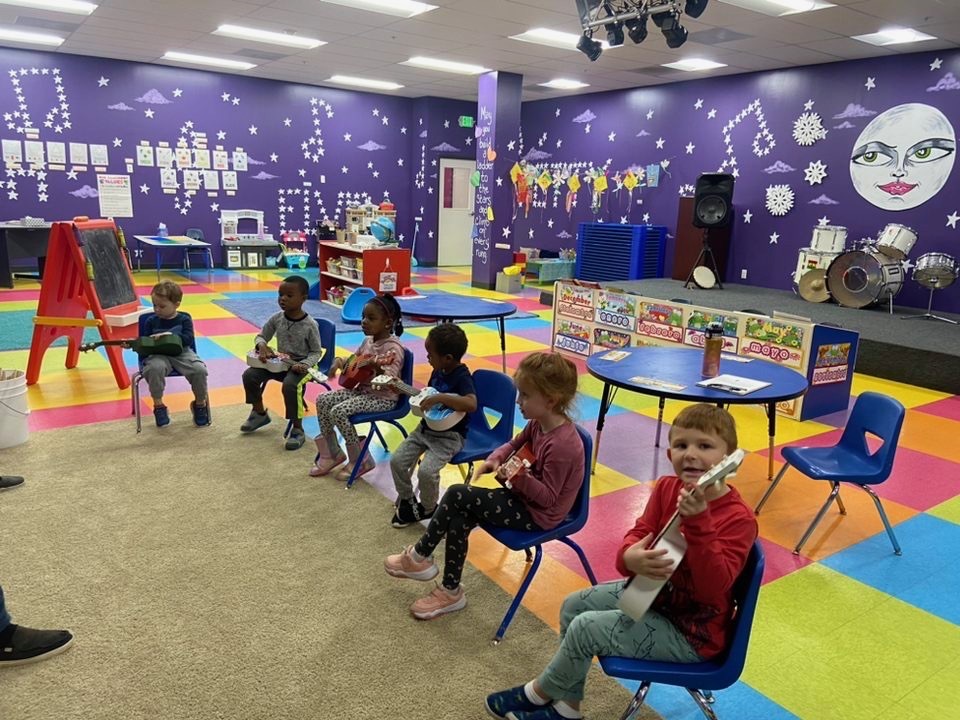
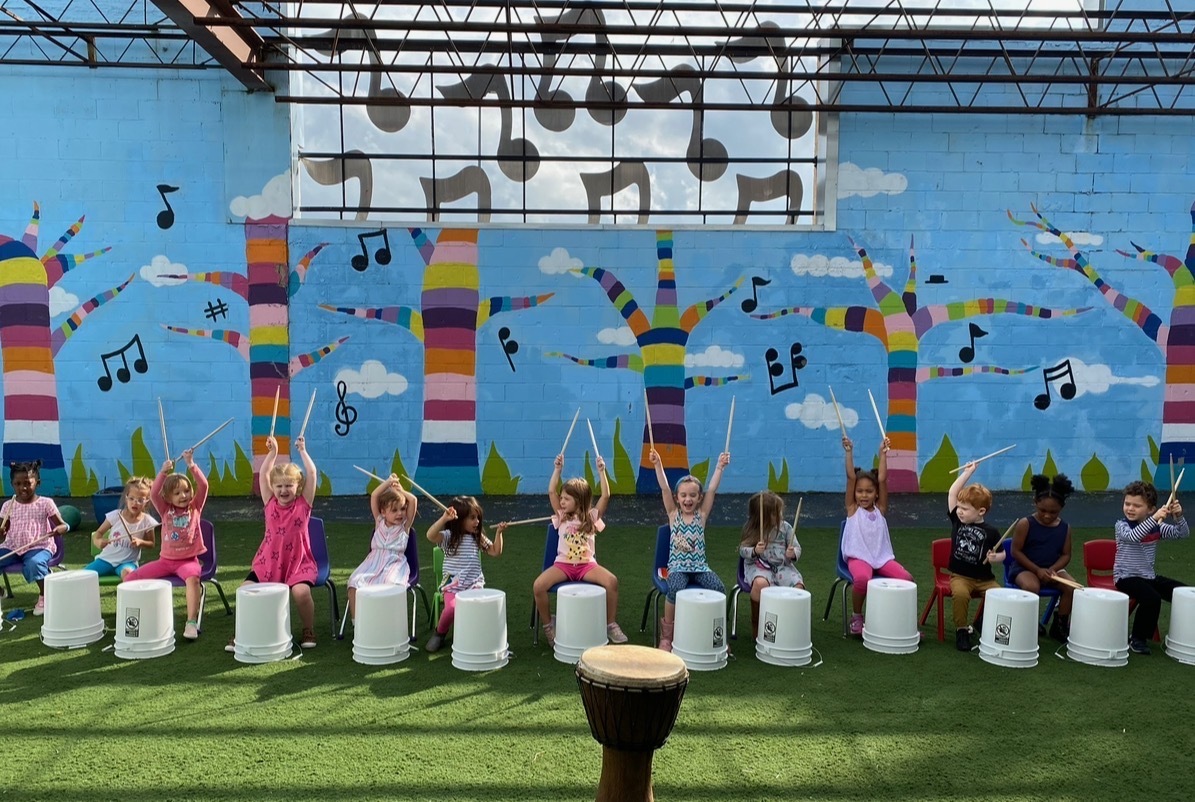
At Drool of Rock, language-through-music isn’t a scheduled lesson that happens once a day, it’s woven into circle time, transitions, snack time, and cleanup throughout the entire day. Teachers use call-and-response songs to introduce new vocabulary, rhyming games to build phonological awareness, and simple musical cues to signal transitions instead of repeating verbal instructions. Because these routines repeat daily, children hear the same words and phrases enough times to actually retain them, without it ever feeling like drilling. This approach also gives teachers a natural way to gauge where each child is developmentally, since participation in call-and-response songs tends to reflect comfort with spoken language. Milford Mill families can see how this fits into the broader daily schedule in our full curriculum overview.
Language Milestones Music Can Help Support
Every child develops language at their own pace, but music-based routines tend to support a few common milestones. Infants and young toddlers often begin responding to familiar songs with sounds, gestures, or attempts at words well before they’re speaking full sentences. Toddlers frequently move through a vocabulary explosion, and repetitive songs give them low-pressure, repeated exposure to new vocabulary every day. Preschoolers typically build longer sentences and more complex storytelling, which group singing and call-and-response activities reinforce through practice with sequencing and listening. None of this replaces individual speech development, which varies by child, but a daily rhythm of song and repetition gives every child frequent, natural opportunities to practice.
Ages We Serve from Milford Mill
Drool of Rock welcomes children from 6 weeks old through age 5, so language-focused musical learning starts in infancy and continues through our toddler room and into our Pre-K & Kindergarten Readiness program. Families can stay with the same teachers and the same language-through-music approach the entire time, rather than adjusting to a new philosophy every time their child moves up a room.