Music is more than a “special” at Drool of Rock. It is the thread that ties the entire day together, from the first hello to the last goodbye. When rhythm guides routines and songs support every skill, children relax into learning and grow in ways that feel natural, joyful, and lasting. Our approach is rooted in the concept of a music-integrated preschool.
If you are curious about what an integrated approach looks like in real classrooms, this peek inside our day shows how songs, movement, and instruments are used with purpose. You will see how music supports attention, memory, language, and motor development without turning school into a concert. The goal is simple, child-first learning that sticks.
In fact, the principles of a music-integrated preschool enhance the learning experience for every child.
Whether your child is an infant discovering sound or a preschooler building kindergarten-readiness skills, a music-integrated preschool day helps them focus, try new things, and feel successful.
What “music-integrated preschool” really means
In a music-integrated preschool, music is not an add-on. It is woven into every part of the schedule to make routines smoother and learning more memorable. Teachers use:
- Songs to cue transitions, so children know what is coming and move together calmly.
- Rhythm to support counting, patterns, and attention.
- Echo-reading and echo-singing to build phonemic awareness and clear speech.
- Movement to help self-regulation, social skills, and confidence.
At Drool of Rock, this approach is present in every classroom, from infants through pre-kindergarten. Daily teacher-led music blends with twice-weekly enrichment led by professional musicians, so children experience both playful exploration and expert guidance.
A day in the life: music guiding every moment
Here is how integration shows up across a typical day.
Morning drop-off and warm-up Soft background music greets families at the door. As children enter, they hear familiar welcome songs that signal safety and routine. Infants listen to gentle melodies while teachers model naming sounds. Toddlers and preschoolers join quick call-and-response chants, warming up voices and attention.
Circle time with call-and-response Circle begins with a steady beat on a hand drum. Children echo their names, clap syllables, and practice simple beat patterns while counting to the day’s date. During read-alouds, teachers use echo-reading to highlight letter sounds, rhymes, and pauses. This playful back-and-forth boosts listening, turn-taking, and phonemic awareness.
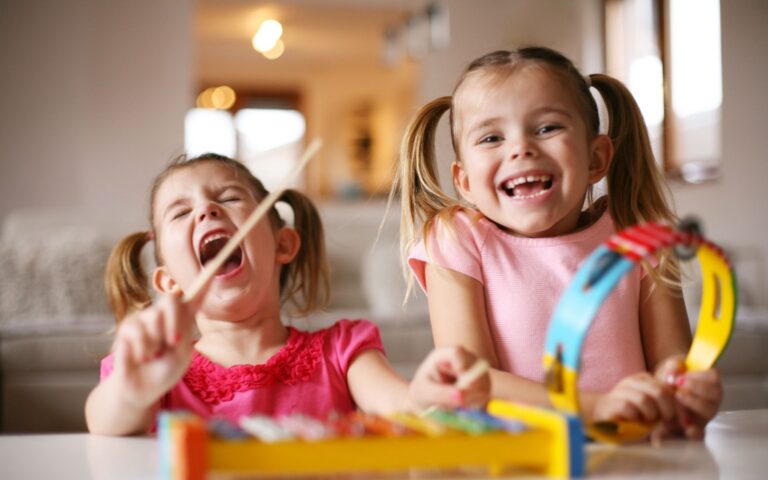
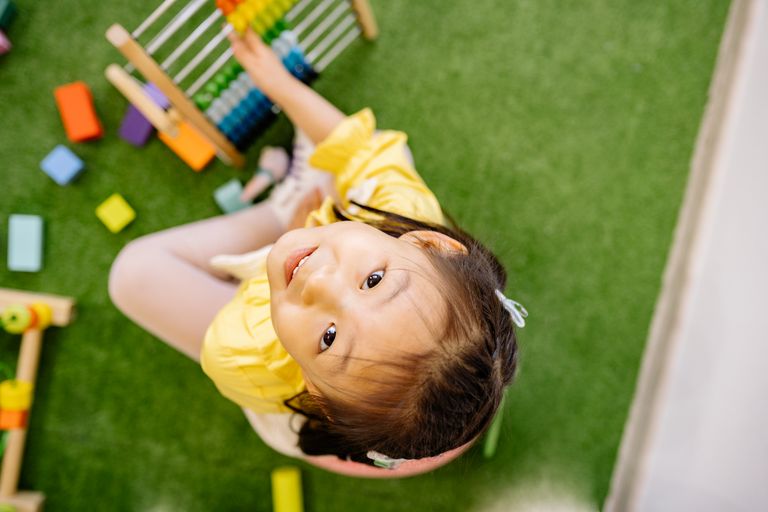
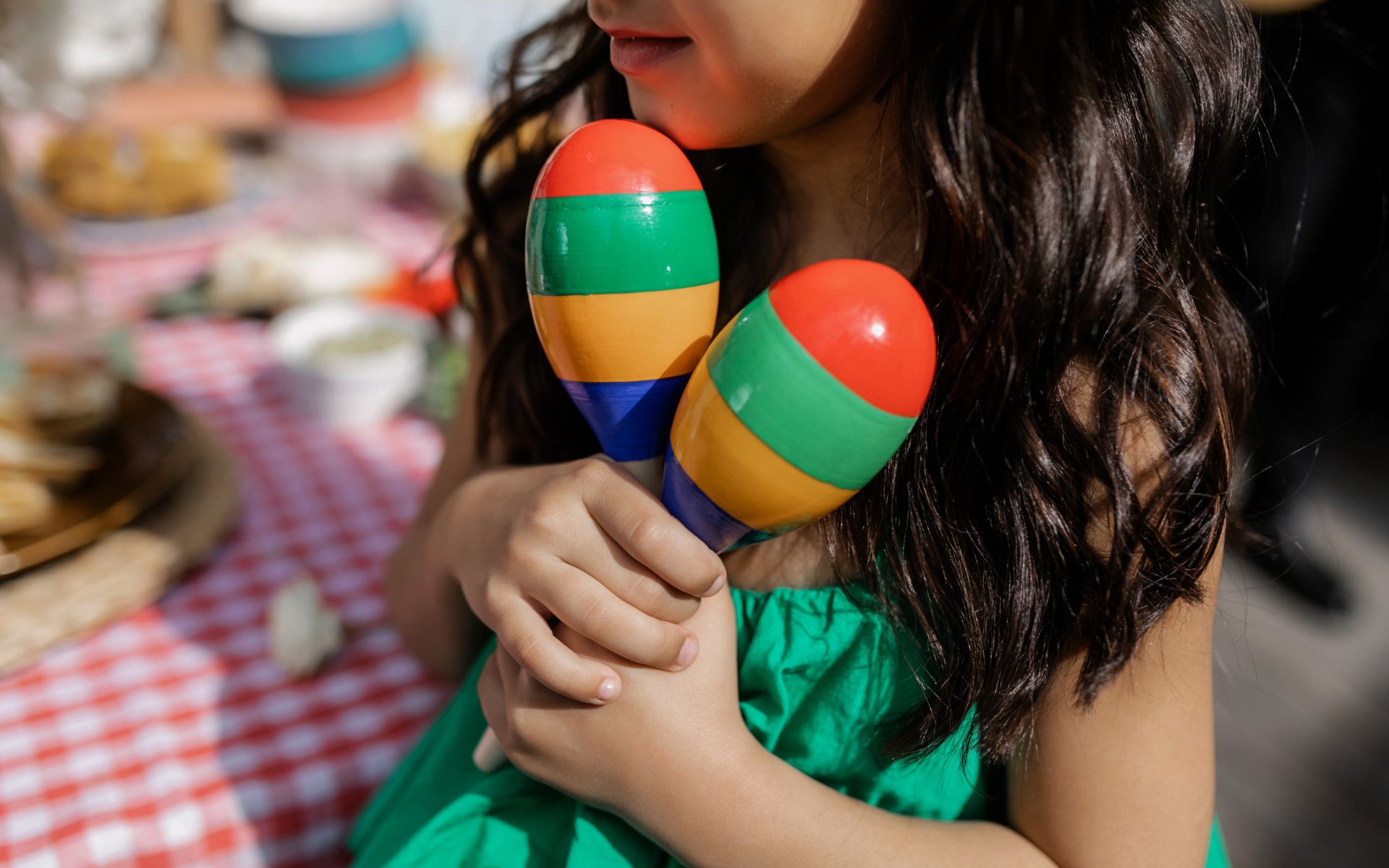
Centers, art, and instrument exploration Instruments are introduced with intention. Shakers teach soft and loud. Drums model steady vs. stop. A small ukulele or beginner piano invites gentle finger work that supports fine motor control. At the art table, children paint to slow or fast music, noticing tempo as they create. In the library corner, song-based storybooks turn print into rhythm, so print concepts feel approachable.
Snack, lunch, and social talk Family-style meals are paired with calm playlists to set the tone. Teachers lead “question songs” that invite conversation: “What fruit do you see?” Children respond in short musical phrases, which supports clear speech and confidence. Simple beats under the table can refocus wiggly bodies without shushing.
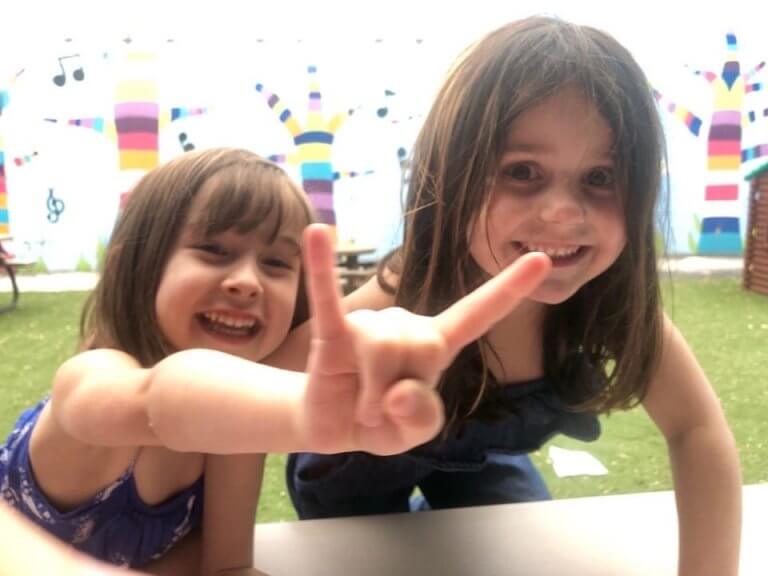
Outdoor music play In our turf-covered courtyards, movement and music meet. Children follow drum signals for start-and-stop running, hop to a beat to practice balance, and go on sound scavenger hunts. These large-muscle activities grow coordination and help children match body control to a steady pulse.
Calm-down beats and rest Before nap, teachers lower lights and shift to lullabies or gentle instrumental tracks. A slow heartbeat rhythm on a drum can help synchronize breathing and lower energy. Infants settle with soft humming during bottles; older children learn simple self-regulation routines that they can use at home.
Afternoon stories and mini sessions After rest, storytime includes whisper-reading and rhythm sticks to tap syllables. Quick mini music sessions spark energy for the last stretch of the day. Some afternoons feature musician-led enrichment like drum circles, beginner piano exploration, ukulele sing-alongs, or chorus. These sessions are tailored to age and stage, keeping the joy of discovery front and center.
Pick-up and closing songs Closing songs help children reflect on the day and prepare to transition to caregivers. Sharing time often includes a short performance for friends, building pride and language as children describe what they learned.
How integration strengthens learning across domains
Parents often ask why music is so powerful in preschool. The answer lies in how the brain processes rhythm, pattern, and language together. When a steady beat anchors attention, children are more likely to notice details, follow directions, and remember sequences.
- Attention and memory: A regular pulse supports working memory and helps children anticipate what comes next. Repeated songs make routines stick.
- Language and early literacy: Echo-singing and rhyme highlight letter sounds, syllables, and intonation. Children practice articulation and vocabulary in a low-pressure way.
- Motor skills: Keeping a beat supports timing and coordination, while instrument play strengthens fine motor control needed for writing and self-care.
- Social-emotional growth: Group music builds turn-taking, empathy, and classroom identity. Calm-down beats and lullabies teach self-regulation skills children can use anywhere.
The key difference at Drool of Rock is that these gains happen throughout the day, not only during a weekly music class. Learning is guided by rhythm, creativity, and play all day long.
Concrete examples you will see at Drool of Rock
- Transitions: “Clean up, clean up” songs paired with a 1-2-3 drum signal help groups move smoothly from centers to circle without stress.
- Counting with rhythm: Children tap 1-to-10 on drums, then switch patterns to count by twos, hearing and feeling math structure.
- Echo-reading: Teachers read a line, children echo a phrase, then clap syllables in focus words, connecting sounds to print.
- Movement for regulation: Freeze-dance and slow-motion marches teach control. Calm Down Clouds cues children to match breath to a slow beat.
- Instrument turn-taking: Passing a shaker on the beat builds patience and social awareness while reinforcing pulse.
Quick FAQ
What is the integrated approach in preschool education? It is a way of teaching that weaves music, movement, and play into every routine and lesson. Instead of a separate music time, the whole day uses rhythm and songs to support attention, language, math, and social-emotional learning.
What does “music-integrated preschool” mean? A music-integrated preschool connects subjects and skills across the schedule. At Drool of Rock, that means music supports reading, math, motor development, and self-regulation from drop-off to pick-up.
Why is music important in preschool? Music provides a steady framework that helps children focus, remember, and participate. It turns practice into play, which encourages repetition, confidence, and joyful learning.
How does music affect a child’s brain development? Rhythm and melody engage many brain areas at once. This can strengthen timing, memory, and language networks, especially when music is used consistently within daily routines.
How does music help with language development? Echo-singing, rhyme, and call-and-response highlight sounds in words. Children practice articulation, vocabulary, and conversation skills in short, musical bursts that stick.
See the approach in action
Families looking for a music-integrated preschool in Northwest Baltimore County are invited to tour our Owings Mills or Cockeysville centers. You will see consistent routines, musician-led enrichment, and options for part-time or full-time care for ages 6 weeks to 5 years. To learn more or plan a visit, schedule a tour that fits your family’s calendar. If you are comparing local options, explore our Owings Mills early learning program overview to see how our curriculum comes to life. For a deeper dive into how songs support speech, read our post on language development through music.
Ready to take the next step? Schedule a tour at Owings Mills or Cockeysville to see our classrooms, outdoor courtyards, and music in motion. We look forward to welcoming your family.
Internal links:
- Explore our early learning program overview: https://owingsmills.droolofrock.com/owings-mills-daycare-curriculum/
- Plan your visit in Owings Mills: https://owingsmills.droolofrock.com/owings-mills-daycare-location/
- Learn more about music and language: https://owingsmills.droolofrock.com/blog/music-helps-with-language-development/